
The journey to wellness can often feel overwhelming, especially when it comes to a topic as serious as breast cancer. While the conversation often focuses on genetics or major lifestyle changes, what if we told you that impactful steps could be taken in as little as 28 days, simply by looking at what you put on your skin?
At Lily Bee & Me, our mission is to provide not just exceptional natural skincare, but also to empower you with knowledge. We champion ingredients that are profoundly kind to your body and the planet. That's why we're excited to share insights from a groundbreaking recent study that underscores the power of conscious personal care choices.
The Big News: A Glimmer of Hope from Recent Science
A significant study published in the journal Chemosphere in 2023 illuminated a powerful truth: Avoiding personal care products with parabens and phthalates for just 28 days was shown to reverse molecular changes in breast tissue linked to cancer risk.
This research, often highlighted by organizations like the Breast Cancer Prevention Partners (BCPP), offers tangible, actionable hope for everyone.
Demystifying the Chemicals: What are Parabens and Phthalates?
These aren't household names, but they've likely been in your bathroom cabinet for years:
- Parabens: These are a class of preservatives (look for ingredients ending in -paraben, like methylparaben, propylparaben, butylparaben) used to prevent the growth of bacteria and mold in cosmetics, personal care items, pharmaceuticals, and even some foods.
- Phthalates: Often used to make plastics more flexible (e.g., in food packaging, medical devices) and as solvents or fixatives in fragrances (often simply listed as "fragrance" or "parfum"). Common types include DBP, DEP, and DEHP.
Why Are These Chemicals a Concern? The Endocrine Disruptor Link
The primary concern with parabens and phthalates is their classification as Endocrine-Disrupting Chemicals (EDCs). EDCs are substances that can interfere with the body's hormonal (endocrine) system. Specifically, some studies suggest that these chemicals can:
- Mimic Estrogen: In the body, they may act like weak estrogens. Given that estrogen plays a key role in the development and progression of many breast cancers, this mimicry is a significant concern.
- Impact Hormone Balance: They can disrupt the delicate balance of your natural hormones, potentially leading to effects that may increase cancer risk over time.
Understanding "Reversed Risk": What the Study Really Means
It's crucial to clarify what "reversed molecular changes in breast tissue linked to cancer risk" means. This does not mean the study found a "cure" for breast cancer or that a person's entire lifetime risk of developing cancer was erased in 28 days.
Instead, it means that researchers observed measurable, positive shifts in biological markers within the breast tissue that are associated with or indicative of increased cancer risk. When participants eliminated parabens and phthalates from their personal care routines, these molecular signals began moving back towards a healthier, less risky state within a very short period.
The incredible takeaway? Your body responds quickly and positively to reduced chemical exposure!
The Power of 28 Days: Rapid Body Response
The relatively short 28-day timeframe is a powerful indicator. Parabens and phthalates are known to metabolize and be excreted from the body relatively quickly. This means that if you stop using products containing them, your body's burden of these chemicals can decrease significantly within a matter of weeks. This study strongly suggests that this rapid reduction in exposure can lead to immediate and measurable improvements in key biological markers.
Empower Yourself: Practical Steps to Reduce Exposure
This research empowers you to take direct, impactful action. Here's how you can reduce your exposure to parabens and phthalates:
- Read Labels Carefully: Look for "paraben-free" labels. For phthalates, it's trickier as they can be hidden under "fragrance" or "parfum." Opt for products that disclose all fragrance ingredients or use only essential oils.
- Choose "Free From" Products: Prioritize brands that explicitly state their products are free from parabens, phthalates, and other common endocrine disruptors.
- Minimize Plastic Contact: Where possible, choose glass or stainless steel containers for food and water, especially for heating or storing fatty foods.
- Support Transparent Brands: Opt for companies that are open about their ingredient sourcing and manufacturing processes.
Lily Bee & Me's Commitment: Clean Beauty for Your Health
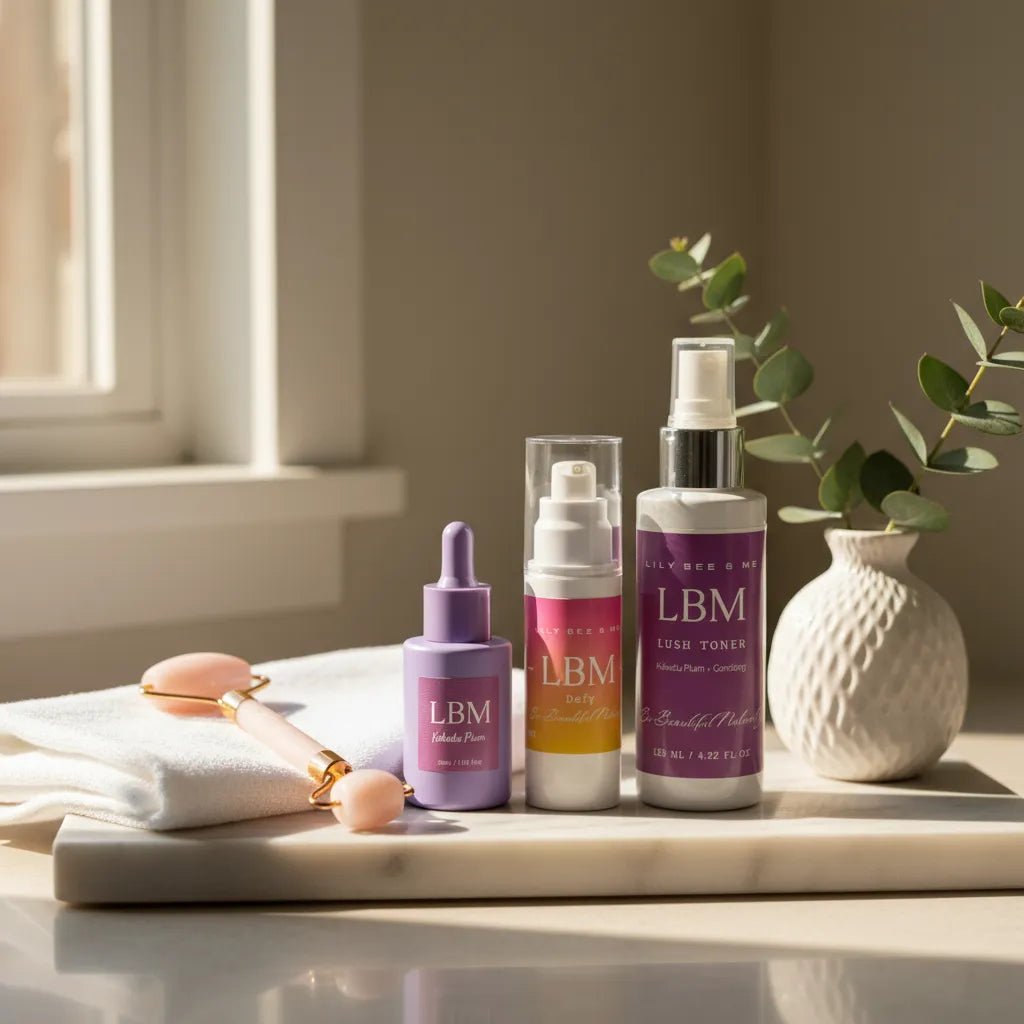
At Lily Bee & Me, our foundation is built on this very principle: What you put on your skin matters. We are immensely proud that our formulations are meticulously crafted to be free from parabens, phthalates, harmful synthetic chemicals, and artificial fragrances. We choose potent, naturally derived actives and nature identical ingredients that work in harmony with your body, not against it.
From our LBM Hyaluronic+ Serum to our nourishing LBM Revival Serum, every product is designed to be profoundly kind yet relentlessly effective, supporting your skin's health and your overall well-being.
This study reinforces our belief that making conscious choices in your personal care routine can have a significant and positive impact on your health. You have the power to make a difference, one product at a time.
Disclaimer: This blog post is for informational purposes only and does not constitute medical advice. Please consult with a healthcare professional for personalized medical advice regarding breast cancer risk assessment and prevention strategies.